




No products in the cart.
Wool Bedding in Summer: Counterintuitive, and It Works
Wool bedding in summer deserves a clear, practical explanation. Suggest wool bedding to someone sweating through a July night and you will get a strange look. Wool means jumpers, and jumpers mean winter. But the property that makes wool good in cold weather is not insulation — it is regulation, and regulation cuts both ways.
The short answer. Wool absorbs and releases moisture without feeling wet, which lets sweat evaporate instead of pooling. Since most of what we call overheating at night is actually humidity against the skin, wool bedding is often more comfortable in a warm room than the cotton it replaced.
Wool bedding in summer: What wool is actually doing
Wool fibres can hold a substantial share of their own weight in moisture vapour while still feeling dry to the touch. That is the whole trick. When you perspire, the fibre takes the moisture up, moves it through the duvet or topper, and releases it into the air. Synthetic fill cannot do this — it repels moisture, which means the moisture stays on you.
The secondary effect is that the air trapped in a wool batt insulates variably depending on humidity, so the same duvet feels warmer on a cold dry night and cooler on a warm humid one. That is not marketing; it is a consequence of how the fibre handles water.
Where to use it
- Duvet. A wool duvet at a mid weight often replaces both your summer and winter duvets.
- Mattress topper or protector. This is the biggest win, because it sits between you and a foam mattress that holds heat.
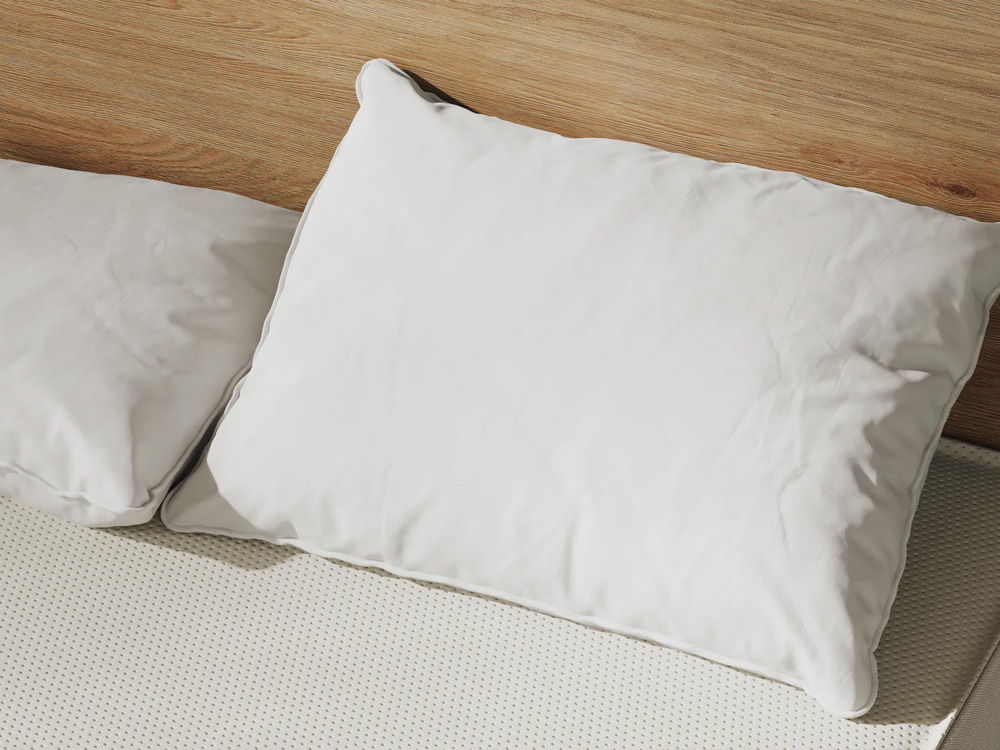
- Pillow. Wool-filled pillows run cooler than foam and hold their shape better than down.
- Not sheets. Next-to-skin, cotton percale or linen is more comfortable. Wool works as the layer behind them.
| Bedding | Summer comfort | Moisture handling | Maintenance |
|---|---|---|---|
| Wool | Very good | Excellent | Air it; rarely needs washing |
| Cotton | Good | Good, but holds damp | Easy, machine wash |
| Linen | Excellent | Very good | Easy, improves with washing |
| Down | Fair | Fair | Needs specialist cleaning |
| Polyester fill | Poor | Poor — traps humidity | Easy, but flattens |
| Bamboo viscose | Good | Good | Easy, less durable than cotton |
Starting with a topper
If you want to test whether wool suits you without replacing the whole bed, a wool topper is the smallest useful experiment — it sits directly under the sheet where the heat problem is. The Wool Room specialise in British wool bedding across duvets, toppers and pillows.
See wool beddingAffiliate link — we may earn a commission at no extra cost to you.
The allergy question
People who react to wool jumpers usually react to coarse fibre diameter, not to wool itself, and bedding wool is generally fine. Separately, wool is naturally inhospitable to dust mites because it regulates humidity below the level they need, which is why it gets recommended for people sensitive to house dust. If you have a diagnosed wool allergy, that is a different matter and worth checking with your GP.
Care, which is less work than you expect
Wool duvets and toppers do not need washing the way cotton does. Air them outdoors on a dry day a couple of times a year and they self-freshen; the lanolin residue in the fibre resists odour. Use a washable cotton cover for the layer that touches you and wash that. Machine washing a wool duvet, unless it explicitly says you can, will felt it permanently.
Wool pillows and mattress pads
Wool works best as a complete layer rather than a single item — a wool topper under a cotton sheet with a wool pillow behaves differently from one piece on its own. Sleep and Beyond make washable wool pillows, pads and duvets designed to work together.
Affiliate link. We may earn a commission at no extra cost to you.