




No products in the cart.
Essential Accessories for a Cozy Sleep Environment

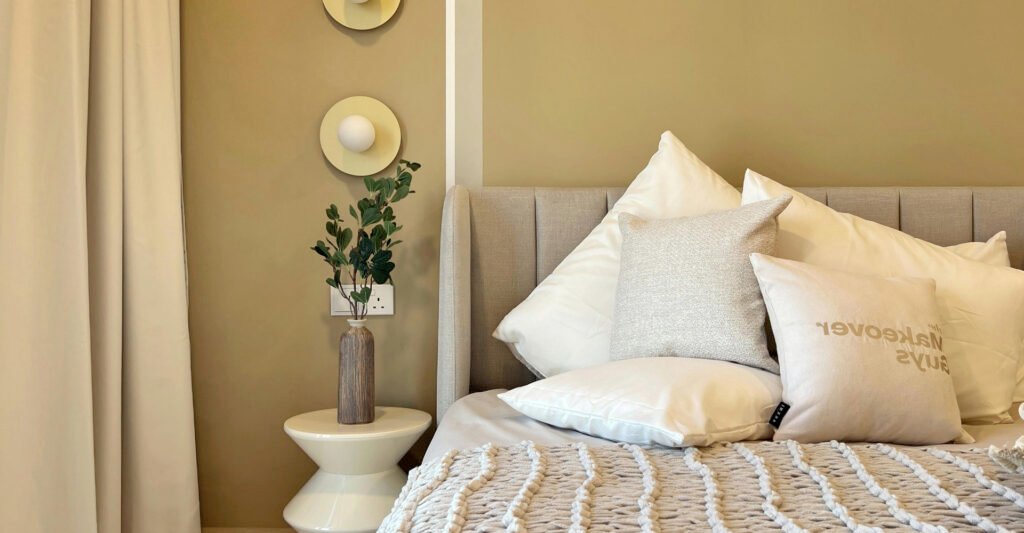
A cosy bedroom is not automatically a sleepy bedroom. Heavy blankets, fragrance and decorative lighting can look comforting while making the room too hot, bright or complicated at bedtime. Start with the conditions the nervous system notices: light, noise, temperature and physical comfort.
Control light before buying gadgets
Make the room as dark as is practical. Cover bright standby lights and use curtains that block the actual window, not merely the centre pane. If blackout curtains are impossible, a well-fitting eye mask is a cheap test.
In the hour before bed, reduce overhead light. A warm bedside lamp placed below eye level is less alerting than a bright ceiling fixture. The goal is not a dramatic colour; it is simply less light reaching the eyes.
Keep temperature adjustable
Most adults sleep better in a room that feels slightly cool rather than warm. Use layers that can be moved independently. A breathable sheet, light blanket and appropriate duvet provide more control than one very heavy comforter.
If the bed feels hot, test the waterproof protector, duvet and sleepwear before replacing the mattress. Heat complaints are often caused by the layers closest to the body.
Make noise predictable
Irregular sound is more disturbing than steady low-level sound. Fix rattling vents, loose blinds and bed-frame squeaks first. A fan or simple sound machine may mask traffic, but it should be quiet enough that it does not become another stimulus.
Reduce the work required at bedtime
- Put chargers away from the pillow.
- Keep a clear surface for glasses, medication or water.
- Prepare tomorrow’s essentials before entering bed.
- Use one basket for items that otherwise collect on the chair.
- Keep the route to the bathroom clear and safely lit.
Add comfort only when it has a job
A supportive pillow, smooth sheets and a blanket of suitable weight are functional. Ten decorative cushions are storage work. Fragrance can be pleasant, but strong oils may irritate airways and are not a treatment for insomnia.
Approved sleep-product options: Egyptian Linens offers sheets and bedding; SweetNight carries pillows and cooling sleep products. Readers considering pressure-based comfort can view Mosaic Weighted Blankets.
Change the room in the order of impact: darkness, temperature, noise, mattress support, pillow height, then decoration. A calm bedroom is not the one with the most accessories; it is the one that asks the least from you when you are tired.