




No products in the cart.
Kids and Teen Mattresses in the US: Sizes, Bunk Bed Safety and Certifications
Affiliate disclosure: Sleeping Express may earn a commission when you buy through links on this page, at no extra cost to you. We have not slept on every product mentioned; guidance is based on published specifications and materials from each manufacturer. Prices were correct at the time of writing and change often, so check the current price before you buy.
Buying a mattress for a child in the United States involves a set of constraints that adult mattress shopping does not. The bed frame is often a bunk, a trundle or a daybed with a height limit. Accidents are a design requirement rather than an edge case. The mattress will be jumped on. And the child will grow — sometimes a foot of it — inside the mattress’s useful life.
This guide covers what actually matters for kids and teens: which size to buy and when, why mattress thickness is a safety question on bunk beds, which certifications are worth insisting on, and how to think about firmness for a growing body.
Which size, and when
The standard American progression is crib, then Twin, then either Full or Twin XL depending on the teenager. There is a strong argument for skipping a step.
| Size | Dimensions | Typical stage | Notes |
|---|---|---|---|
| Twin | 38–39 × 75 in | Age 3 through early teens | Fits almost every bunk, trundle and daybed. The default first “big bed” |
| Twin XL | 38–39 × 80 in | Tall teens, and college | Same width as a Twin, five inches longer. Also the US dorm standard |
| Full | 53–54 × 75 in | Age 8 onward if the room allows | Much more width for sprawling sleepers and for a parent reading bedtime stories. Still only 75 in long |
| Queen | 60 × 80 in | Teens in a large room | Rarely necessary, but future-proofs the purchase into adulthood |
The trap is length. A Full is wider than a Twin but exactly the same 75 inches long. A teenager who reaches 6 feet will hang off a Full just as much as off a Twin. If height runs in your family, Twin XL is often the smarter buy than Full despite feeling like a smaller upgrade.
Why thickness is a safety spec on bunk beds
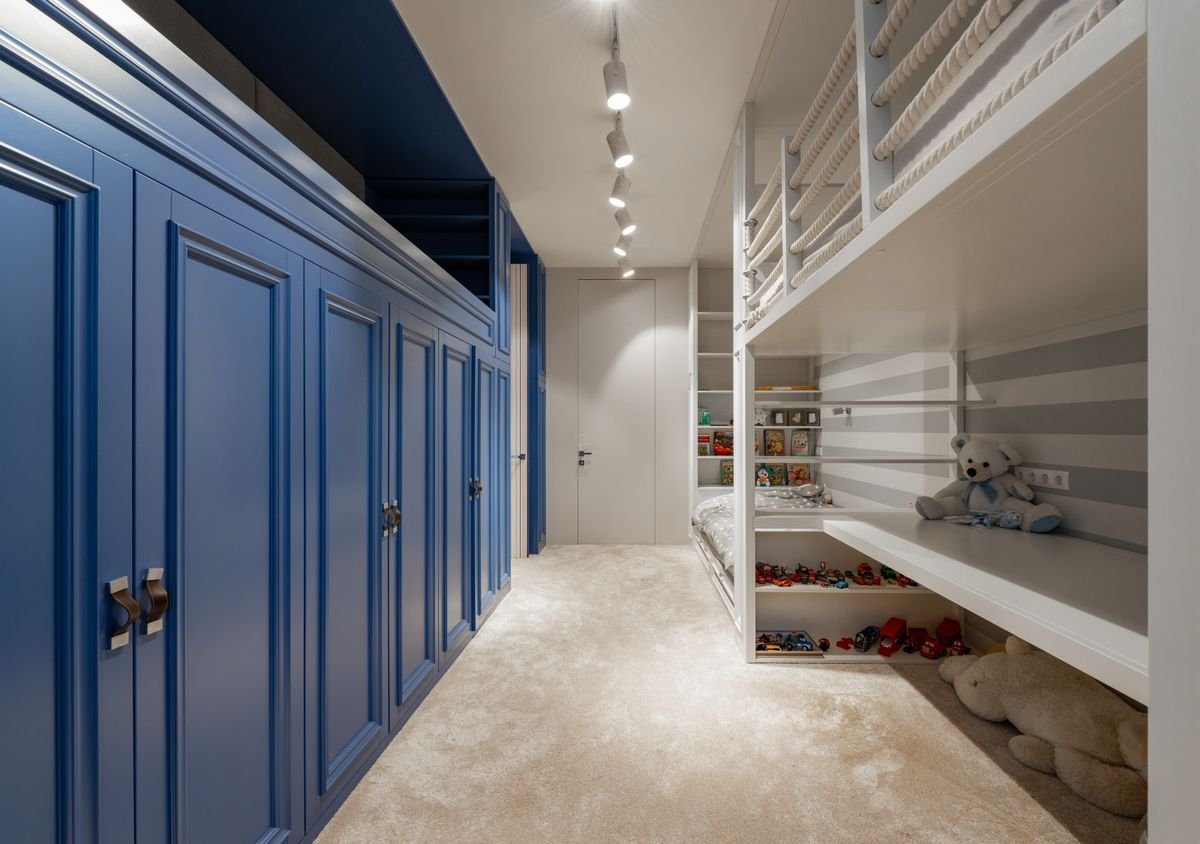
This is the single most overlooked point in kids’ mattress shopping. Bunk bed guard rails are designed around a maximum mattress thickness. Put a thick adult mattress on a top bunk and you raise the sleeping surface until the rail no longer clears it by a safe margin.
US bunk bed manufacturers typically specify a maximum mattress thickness, often around 6 to 8 inches, and print it on the frame or in the manual. Check yours before ordering, not after.
This is why purpose-built kids’ mattresses run thin. 5 Little Monkeys builds its mattress at 8 inches specifically so it works with platform beds, daybeds, trundles and bunk beds — the company says as much on the product page. The same logic applies to trundles, where total thickness determines whether the lower unit still slides under the upper bed.
Firmness for a growing body
Children generally do better on a firmer surface than adults choose for themselves. A light body does not compress a soft comfort layer enough to be supported by what is underneath it, so a plush mattress that feels luxurious to an adult can leave a child lying in a hammock.
Most purpose-built kids’ mattresses therefore sit in the cushion-firm range. 5 Little Monkeys rates its mattress at around 7 on a 1-to-10 scale, which is firm without being hard. Its stated design intent is support for a growing body with pressure relief distributed across the surface.
One important caution: a mattress is bedding, not a medical device. Manufacturers describe design goals such as spinal alignment, and those design goals are reasonable, but no mattress treats or prevents a musculoskeletal condition. If a child has persistent back or joint pain, that is a conversation with a pediatrician rather than a mattress purchase.
The certifications worth insisting on
For a child’s room, emissions certifications matter more than organic-origin certifications, because the concern is what the mattress releases into a small closed bedroom rather than how the cotton was farmed.
- GREENGUARD Gold — tests chemical emissions into indoor air against criteria that account for sensitive populations including children. This is the one to prioritise.
- CertiPUR-US — certifies the polyurethane foam is made without formaldehyde, mercury, lead and specified phthalates and flame retardants, and meets low VOC limits.
- OEKO-TEX — tests the finished textile, typically the cover, for harmful substances.
- GOTS — certifies organic fibre content in the cover, which is a bonus rather than a safety requirement.
5 Little Monkeys carries all four on its sleep system, with an OEKO-TEX certified organic cotton cover over CertiPUR-US foam.
Waterproofing is not optional
Assume accidents, spilled drinks and illness. A mattress without a waterproof protector will absorb all three, and once liquid reaches the foam core it is effectively unrecoverable — you cannot wash it and you cannot dry it properly.
Two features are worth paying for. A removable, machine-washable cover on the mattress itself, ideally with a heavy-duty zipper that survives repeated washing. And a separate waterproof protector over the top, so you have two barriers and a spare while one is in the wash.
Avoid vinyl-backed protectors if you can. They are genuinely waterproof and genuinely hot; a cotton jersey face with a non-vinyl waterproof backing breathes far better, which matters for a child who already sleeps warm.

What a complete kids’ setup costs
Buying the pieces separately usually costs more than a bundle. The 5 Little Monkeys Sleep System is sold as one set — mattress, kid-sized pillow and waterproof protector together — listed at $499 against a $599 regular price at the time of writing, in Twin, Full and Queen. Published weights are 31 lb for the Twin, 45 lb for the Full and 53 lb for the Queen, which is worth knowing if you will be carrying it upstairs.
The terms attached to it matter as much as the price: a 15-year limited warranty, a 100-night risk-free trial, and free shipping and returns. For a purchase that has to survive a decade of childhood, a long warranty is not a gimmick — it is the main thing separating a kids’ mattress from a cheap foam slab.
Prices and promotions change frequently, so check the current figure on the product page rather than relying on the numbers quoted here.
A short buying checklist
- Measure the frame and check the manufacturer’s maximum mattress thickness, especially for bunks.
- Choose Twin XL over Full if length is likely to matter more than width.
- Look for GREENGUARD Gold and CertiPUR-US at minimum.
- Insist on a removable washable cover and a separate waterproof protector.
- Expect cushion-firm rather than plush.
- Check the warranty length and the trial period before the price.
- Air a new foam mattress for 24 to 48 hours before making up the bed — some initial odour is normal and dissipates.
See the 5 Little Monkeys Sleep System
Frequently asked questions
When should a child move from a crib to a bed?
This is a developmental question rather than a mattress question, and the usual trigger is a child beginning to climb out of the crib, which turns the crib itself into a fall risk. Age varies widely and there is no single right answer. Your pediatrician is the right person to ask about timing for your child. What we can say on the mattress side is that the first bed is almost always a Twin, and that a low bed frame or a mattress on a low platform reduces the consequences of rolling out during the transition.
Is memory foam safe for children?
For toddlers and older children sleeping on a firm surface, memory foam is widely used and purpose-built kids’ mattresses are commonly made from it. Infants are a different case entirely: safe-sleep guidance for babies centres on a firm, flat crib mattress with no soft bedding, and a conforming foam surface is not what that guidance describes. Follow current pediatric safe-sleep advice for infants rather than general mattress advice, and speak to your pediatrician if you are unsure.
How thick should a mattress be for a bunk bed?
Check the bunk bed manufacturer’s stated maximum, which is usually printed on the frame or in the assembly manual and commonly falls somewhere around 6 to 8 inches. The number exists because guard rails are designed to clear the sleeping surface by a safe margin, and a thicker mattress raises that surface. This is a safety specification rather than a comfort preference, so treat the stated maximum as a hard limit rather than a guideline.
Do children need a special pillow?
A child’s shoulders are narrower and their head is proportionally smaller, so an adult pillow is usually too tall and pushes the head forward. Purpose-made kids’ pillows use a lower fill height for this reason. Very young children often need no pillow at all, and again this is worth raising with a pediatrician rather than guessing. When you do introduce one, a washable cover matters more than almost any other feature.
How long should a kids’ mattress last?
A good one should cover most of childhood, which is why warranty length is such a useful signal in this category. A 15-year limited warranty implies the manufacturer expects the mattress to survive from a toddler bed through the teenage years. The practical limiting factor is usually size rather than wear — a child who reaches six feet will outgrow a 75-inch Twin long before the foam gives out, which is an argument for Twin XL if height runs in the family.
Related reading on Sleeping Express: cot and children’s mattress sizing and choosing the right pillow.